- About
- Services
- Play
- Sport
- Case Studies
- News
- Contact
- Pitchbuilder

3G pitches are everywhere now - school playgrounds, grassroots clubs, professional training grounds, and increasingly at match venues. But the term gets used loosely, and there's more variation inside a "3G pitch" than most people realise. This guide covers exactly what a 3G pitch is, how it's built, what certifications mean, which spec suits which sport, and what it takes to get a long life out of one.
A 3G pitch — short for third generation — is a synthetic turf surface that combines long-pile artificial grass fibres with two types of infill: a sand base layer to stabilise the pile, and a rubber crumb infill for performance and shock absorption. A shockpad is typically installed beneath the carpet to absorb impact further.
The "generation" part refers to the evolution of artificial grass technology:
3G is the only generation currently accredited by FIFA, World Rugby and the RFU for football and rugby use. That's what makes it the default choice for clubs, schools and facilities that need to host affiliated match play.
Every 3G pitch shares the same basic structure, working from the ground up:
1. Sub-base A compacted aggregate sub-base (typically MOT Type 1) provides the structural foundation. The quality and depth of the sub-base affects drainage performance and how well the surface holds up to heavy use over time. Getting this wrong is one of the most common causes of early pitch failure.
2. Shockpad A rubber shockpad layer is installed on top of the sub-base. This absorbs impact, reduces stress on players' joints, and contributes directly to performance test results. Shockpad depth and composition varies by sport — rugby surfaces need a thicker, more cushioned shockpad than football.
3. Synthetic turf carpet The artificial grass carpet is laid over the shockpad and secured at the edges. Pile fibres are tufted into a backing material, and the density of tufting (stitch rate) and fibre type both affect durability and how the ball behaves on the surface.
4. Sand infill Kiln-dried sand is brushed into the base of the pile to stabilise the yarn and keep fibres upright.
5. Rubber crumb infill Rubber infill is then applied on top of the sand layer to the correct depth for the intended sport. This is where most of the performance characteristics come from — shock absorption, ball rebound, and how the surface responds to sliding players. Standard rubber crumb is typically SBR (styrene butadiene rubber), though alternative organic, cork and TPE infills are also available for facilities prioritising sustainability.
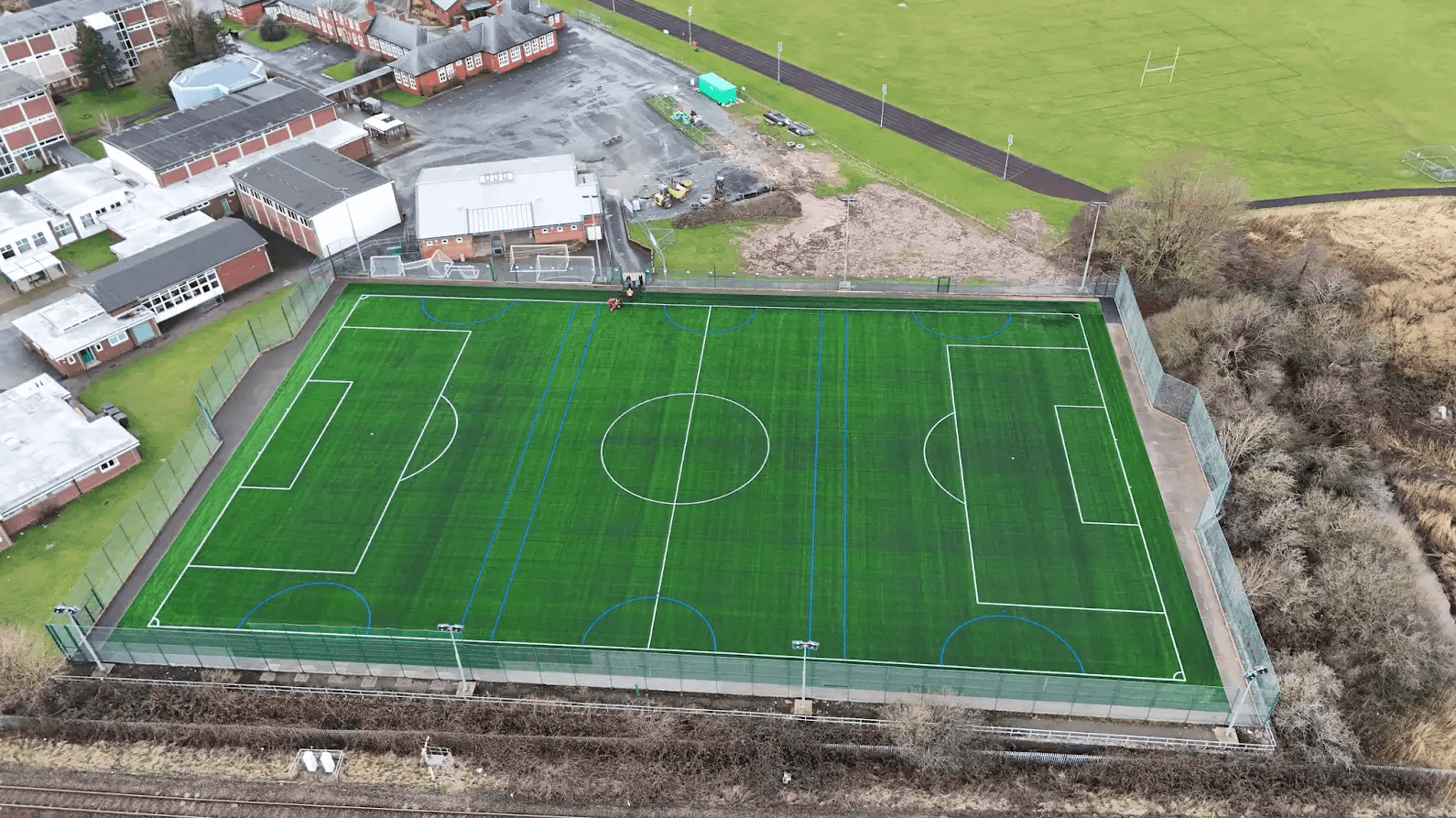
One of the most important decisions in a 3G spec is pile height, and it varies meaningfully by sport:
This is why the intended use of a pitch has to be established before any specification work begins, not after. A pitch designed purely for football isn't the same product as one built to serve football and rugby, even if both qualify as "3G."

The governing body certifications attached to a 3G pitch aren't just marketing. They're independent test results that confirm the pitch performs within defined tolerances for ball roll, bounce, shock absorption and rotational resistance. The main ones relevant to UK facilities are:
FIFA Quality The standard for community, grassroots and amateur football. A FIFA Quality pitch is built for heavy, consistent use and is the minimum required for a pitch to be listed on the FA's 3G Pitch Register.
FIFA Quality Pro The higher tier, tested to professional-level consistency. Typically specified for professional training grounds or stadium pitches. Most schools and community clubs don't need this level.
FA 3G Pitch Register The FA requires any pitch to be listed on the Register before it can host affiliated league matches. Getting on the Register means the pitch has been independently tested to FIFA Quality standard. It's worth specifying this at the planning stage if affiliated match play is the goal, as not all 3G pitches are built to this standard by default.
World Rugby Regulation 22 The standard for rugby union. A pitch used for affiliated rugby must meet Regulation 22 requirements, which drive the thicker shockpad and longer pile height specs for combined football and rugby surfaces.
FIH National (Community Use) The relevant standard for hockey. If a pitch is being specified to serve hockey alongside football, the infill application and pile height need to be set to meet FIH National as well.
The practical case for 3G over natural grass has strengthened considerably over the past decade.
All-weather, all-year availability. A well-built 3G pitch doesn't get rained off, waterlogged or frozen out. For a school with limited outdoor space, or a club trying to maximise hire hours, this matters more than almost any other factor.
Playing hours. A natural grass pitch typically supports 4-6 hours of play per week before it needs recovery time. A maintained 3G pitch can safely handle 60-80 hours of use per week — sometimes more.
Player development. The consistency of a 3G surface is genuinely valuable for skill development, particularly at youth level. Dean Saunders, the former international player and coach, put it plainly when speaking to BBC News: "players who'd come through academies with good 3G pitches had really good skill levels." That consistency of surface lets players focus on technique rather than adapting to variable grass conditions.
Revenue generation. Schools that install a 3G pitch often hire it out to local clubs and community groups, generating income that can cover the cost of resurfacing at the end of the pitch's life. A well-managed pitch can genuinely pay for its own replacement.
Iceland as a case study. Before the 2016 Euros, BBC Sport reported that Iceland had 30 full-sized all-weather pitches and over 150 smaller ones for a population of around 329,000. For a country where outdoor play is impossible for much of the year, 3G surfaces — many installed indoors — were credited with a significant part of why that small nation was producing elite footballers. The same principle applies at grassroots level anywhere the weather is unreliable, which is most of the UK.
A 3G pitch is not maintenance-free. The guarantee on most surfaces (typically 8 years as standard) is conditional on appropriate maintenance being carried out throughout the pitch's life. In practice, that means two things: in-house weekly maintenance, and scheduled professional visits.
Weekly in-house maintenance The pitch should be drag-brushed at least once a week to keep the pile upright and redistribute infill evenly. On larger pitches, a small tractor with a drag brush attachment is more practical than a manual brush.
Professional maintenance visits A minimum of four professional visits per year is the standard recommendation. These cover a deeper brush of the whole surface, a check and top-up of infill levels (typically at the end of the year when migration has accumulated), moss and algae treatment, and any line marking repairs that have worn. The infill top-up in particular is something in-house brushing alone can't replicate properly.
Get the maintenance regime right and there is no reason a 3G pitch can't last well beyond its 8-year guarantee. Neglect it, and problems appear much sooner. Our maintenance service covers both scheduled visits and ad-hoc inspections if a pitch is showing early warning signs.
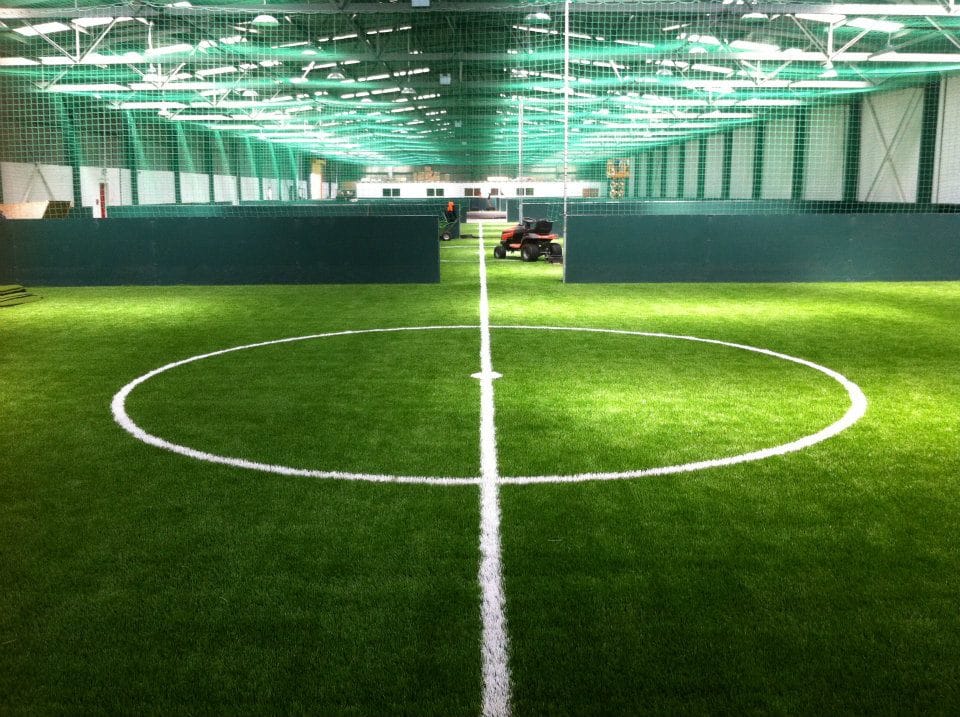
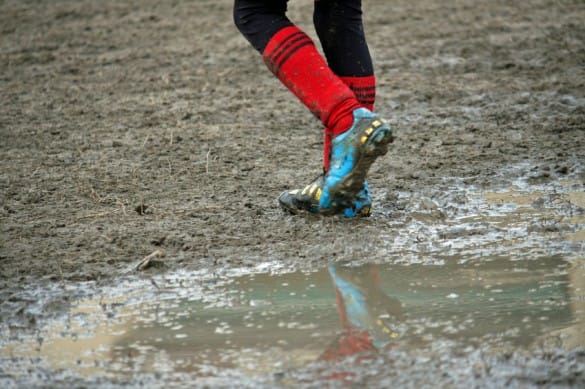
Worth including because it's a common source of unnecessary wear. Standard firm-ground (FG) boots with moulded bladed studs are designed for natural grass and create uneven pressure points on a 3G surface. Artificial-ground (AG) boots are built specifically for 3G pile height and infill, distributing load more evenly and extending the life of the carpet in high-traffic areas like penalty boxes and centre circles.
A well-maintained 3G pitch typically lasts 8-12 years, sometimes longer at lower usage levels. The signs that resurfacing is due include infill loss or migration, seams opening, inconsistent ball bounce, drainage problems, and a failed annual performance test. If any of those are starting to show, our guide on how and when to resurface your pitch covers the decision in detail.
What does 3G stand for in football? Third generation. It refers to the third phase of artificial turf development, distinguished from earlier generations by its long pile (40-65mm), dual sand and rubber infill, and performance characteristics close to natural grass.
Is a 3G pitch the same as astroturf? Not exactly. "Astroturf" is technically a registered brand name often used informally for all artificial grass. Modern 3G pitches are a completely different product to the original Astroturf surfaces of the 1970s and 80s, which were abrasive, low-pile, and had no infill. STM is not associated with the Astroturf brand.
What's the difference between 3G and 4G pitches? 3G pitches use sand and rubber infill and are accredited by FIFA, World Rugby and the RFU. 4G and 5G surfaces use little or no infill and, while marketed as next-generation, currently have no governing body accreditation for competitive play in football or rugby.
Do you need planning permission for a 3G pitch? Usually yes, depending on the size and location of the installation. Most full-size pitches will require planning consent, particularly for floodlighting. A site survey and early conversation with your local planning authority is the right starting point.
How many hours can a 3G pitch handle per week? A well-built, regularly maintained 3G pitch can handle 60-80+ hours of use per week. Natural grass typically manages 4-6 hours before needing rest and recovery.
Can 3G pitches be used for hockey? Yes, on a combined football and hockey spec (typically 40mm pile with a shockpad). The infill application differs from a football-only surface to meet FIH National standards.
How long does a 3G pitch last? Typically 8-10 years under standard use, with the manufacturer's guarantee usually covering 8 years. Well-maintained lower-usage pitches can go 12 years or beyond before needing a full resurface.
Whether you're planning a new pitch, looking at a sport-specific spec, or trying to work out whether a resurfacing or a full rebuild is the right next step, we offer a free site consultation and can work through the options with you.
01642 713 555 | info@stmworld.co.uk | Get a quote
Design your pitch before you call: Pitchbuilder tool
We understand the design and construction of your pitch/court is vital. We can help you optimise your space with an extensive array of options for size, colour, markings, fencing & lighting and gate positions. We’ll guide you through the process of designing your turf, so that you can visualise your pitch/court before its construction.
Try our free pitch builder, or give us a call to talk to one of our experts.