- About
- Services
- Play
- Sport
- Case Studies
- News
- Contact
- Pitchbuilder

Synthetic Turf Management have supplied and installed 100’s of sports pitches, courts and Multi Use Games Areas across the UK.
One of the most common questions Synthetic Turf Management and Synthetic Turf Maintenance are asked is What is the difference between a 2G Sand filled and Sand dressed artificial turf
In simple terms the difference between sand-filled and sand-dressed artificial turf (Astro turf) comes down to the quantity of sand infill, this changes how the surface feels and performs, and what sports it’s best suited for. The surface can be laid with or without a pad so again the feel and performance will differ and infill quantities with slightly differ with pile height and manufacturers
Longer fibres with large amounts of sand brushed in almost up to the top of the pile.
Essentially playing on sand, not directly on the fibres.
Feels firmer, slower, and more abrasive.
Extremely durable and well-suited to multi-sport use and heavy foot traffic.
Sand filled are common with older generation pitches, schools, and community facilities.
Typically used for football training, tennis, and recreational multi-sport areas.
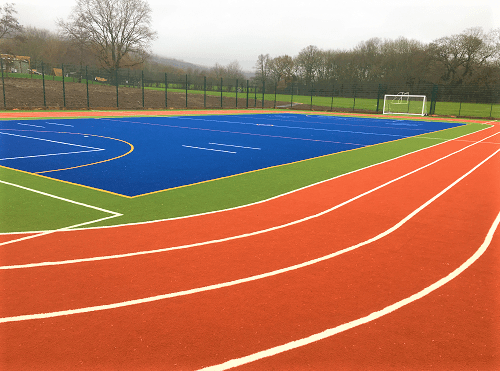
Shorter, denser fibres with much less sand infill, leaving most fibres exposed.
You play on the fibre surface, not on visible sand.
Feels softer, faster, and smoother, with better ball roll.
Less abrasive and more comfortable for players.
Designed mainly for hockey and tennis, but also suitable for multi-use games areas.
Considered a more modern 2G surface offering improved play quality.
In simple terms
Sand-filled = tougher, slower, more durable, cheaper.
Sand-dressed = faster, softer, better playing quality, slightly higher cost.
Short answer: Sand-dressed artificial turf is generally easier and cheaper to maintain than sand-filled turf.
Synthetic Turf Maintenance has helped schools and clubs maintain their pitches with regular deep cleans and decompaction and find Sand-dressed surfaces use much less sand infill, which leads to:
Less brushing and redistribution needed
Lower risk of sand compaction
Less frequent top-ups
Cleaner playing surface (less loose sand migration)
STM’s guides describe sand-dressed systems needing regular but lighter maintenance, mainly brushing, debris removal, and occasional deep cleaning — with lower overall upkeep than sand-filled systems
Sand-filled turf relies heavily on large volumes of sand, meaning:
Frequent drag brushing to redistribute sand evenly
Regular infill level checks and top-ups
Higher risk of compaction, requiring periodic deep decompaction cleaning
More ongoing labour and cost
Maintenance standards note that maintaining correct sand levels is essential throughout the life of sand-filled surfaces, making them more maintenance-intensive overall
|
Surface Type |
Maintenance Effort |
Typical Ongoing Cost |
|---|---|---|
|
Sand-filled |
Higher |
Higher |
|
Sand-dressed |
Lower |
Lower |
STM’s Bottom line
If ease of maintenance and lower long-term cost are priorities, sand-dressed turf is the better option. Call us today for any further help or advice.