- About
- Services
- Play
- Sport
- Case Studies
- News
- Contact
- Pitchbuilder

There's no shortage of artificial football pitch turf on the market - different pile heights, different infills, different certification levels, all marketed as "the best." If you're trying to choose between them without a technical background, it's easy to end up comparing the wrong things. Here's what actually matters, and the questions worth answering before you talk to a supplier.
What is 3G pitch turf, exactly?
"3G" stands for third generation - synthetic turf combined with both a sand infill and a rubber infill, typically with a pile height of 40–60mm. It's the only artificial turf generation currently recognised by FIFA, World Rugby and the RFU for football and rugby use. For comparison:
If the surface needs to be usable for organised football or rugby fixtures, 3G is the only generation that currently clears that bar.
Within 3G turf itself, FIFA awards two certification marks, and the difference matters more than the name suggests:
Most schools, clubs and community facilities only need FIFA Quality - Quality Pro brings a higher spec and cost that's rarely necessary outside professional training or stadium environments. If your pitch needs to be added to the FA's 3G Pitch Register for affiliated match play, your installer should confirm which mark the finished system needs to meet before work starts.
Once you know roughly which generation and certification level you need, these are the factors that actually shape the spec:
Once you can answer these, we can recommend a system that actually fits the brief - and for most projects, a site visit lets us confirm ground conditions and refine the spec further.
Not every project is a stadium pitch - our 5-a-side 3G installation at Millom Leisure Centre, Cumbria is a good example of a smaller-scale, high-quality build done right, manufactured to the same FIFA-tested standard as our larger sports pitches. See more examples on our case studies page.
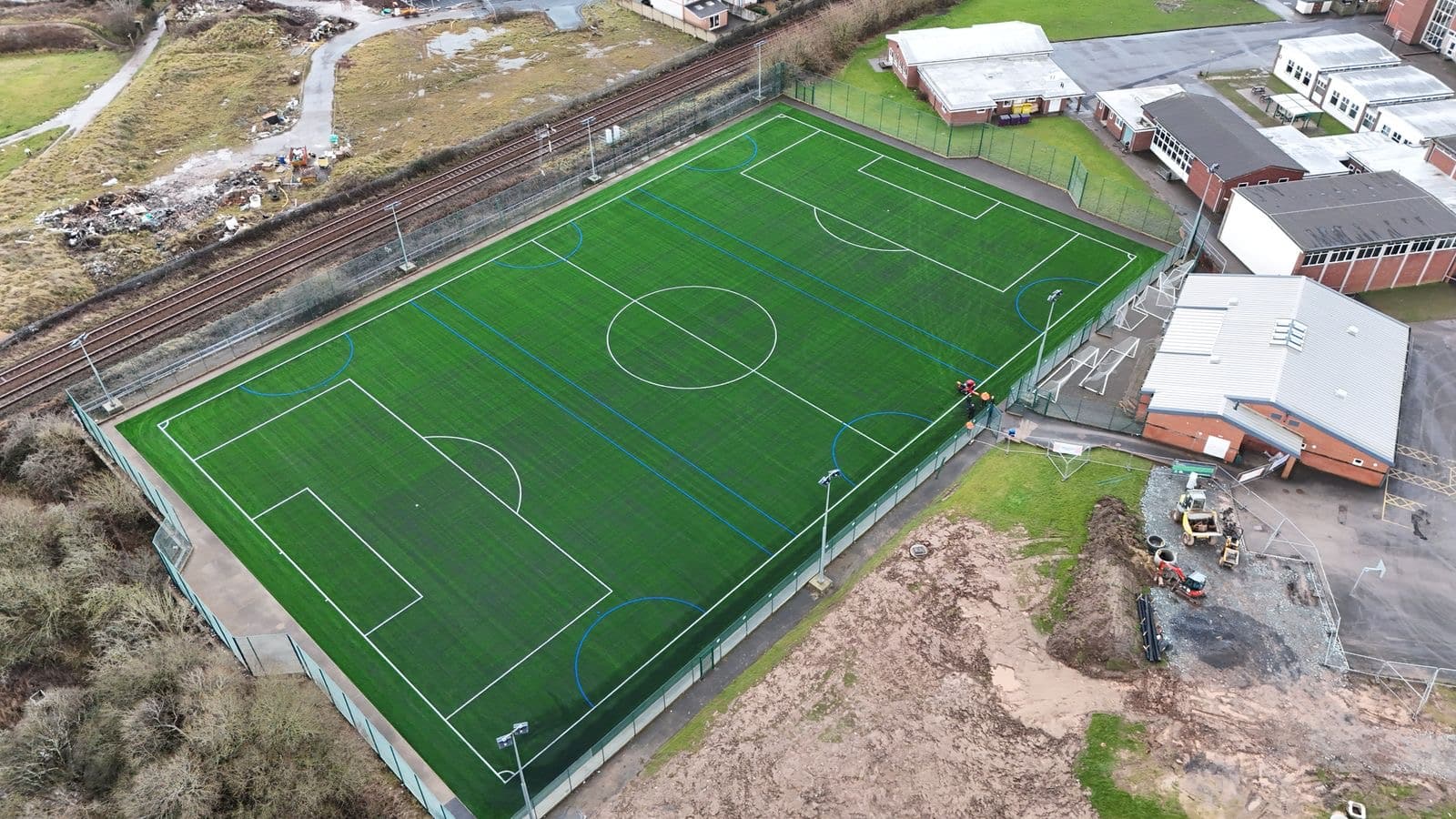
What's the difference between 3G and 4G football turf? 3G turf uses both sand and rubber infill and is FIFA-accredited for football and rugby. 4G and 5G surfaces use little or no infill and, while marketed as newer technology, aren't currently accredited by FIFA, World Rugby or the RFU.
Is rubber crumb infill safe? Yes - a European Chemicals Agency (ECHA) review found no evidence to advise against playing sport on 3G pitches with rubber crumb infill. Some clubs still choose organic or alternative infills for environmental reasons rather than safety concerns.
Do I need special boots for a 3G pitch? Yes, ideally. Artificial-ground (AG) boots are designed for 3G pile height and infill and reduce uneven wear compared with standard firm-ground (FG) studs.
How much does a 3G football pitch cost? UK costs vary widely by size, spec and certification level - a full-size 3G pitch typically runs from the low hundreds of thousands upward, while smaller 5-a-side builds are priced per square metre. A site visit and consultation is the most accurate way to get a figure for your project.
Every project starts with understanding what you actually need the pitch to do - we'll talk you through pile height, infill and certification options and, where useful, arrange a site visit.
01642 713 555 | info@stmworld.co.uk | Get a quote
Want to plan layout, markings and fencing first? Try our Pitchbuilder tool.
We understand the design and construction of your pitch/court is vital. We can help you optimise your space with an extensive array of options for size, colour, markings, fencing & lighting and gate positions. We’ll guide you through the process of designing your turf, so that you can visualise your pitch/court before its construction.
Try our free pitch builder, or give us a call to talk to one of our experts.