- About
- Services
- Play
- Sport
- Case Studies
- News
- Contact
- Pitchbuilder

A Multi-Use Games Area will typically need resurfacing every 8 to 15 years, although there is no universal replacement interval. The type of surface, frequency of use, quality of the original installation, drainage and standard of maintenance will all affect its lifespan.
A heavily used school or community MUGA may show signs of deterioration sooner than a lightly used private facility. Equally, a well-constructed surface with an effective maintenance programme may remain suitable for longer than its estimated design life.
Age should therefore be treated as an indication rather than an automatic reason to resurface. The condition and performance of the facility provide a much more reliable basis for deciding when resurfacing is necessary.
MUGAs can be constructed using synthetic turf, polymeric rubber, porous macadam or an acrylic-coated hard court. Each system wears differently and has its own expected maintenance and resurfacing requirements.
The following ranges provide a general guide rather than a guaranteed lifespan:
|
MUGA surface |
Indicative resurfacing interval |
|
Synthetic turf |
Approx 8- 12 years |
|
Polymeric rubber |
Approx 8 - 12 years |
|
Porous macadam |
Approx 10 - 15 years |
|
Acrylic-coated court |
Recoating may be required after approximately 5–8 years |
|
3G synthetic turf |
Approximately 8–10 years under intensive use |
Some facilities will fall outside these ranges. A surface used throughout the school day and then hired to community groups during evenings and weekends will experience considerably more wear than one used for occasional lessons or recreational sessions.
Weather exposure, surrounding trees and the effectiveness of the drainage system can also influence how quickly the surface deteriorates.
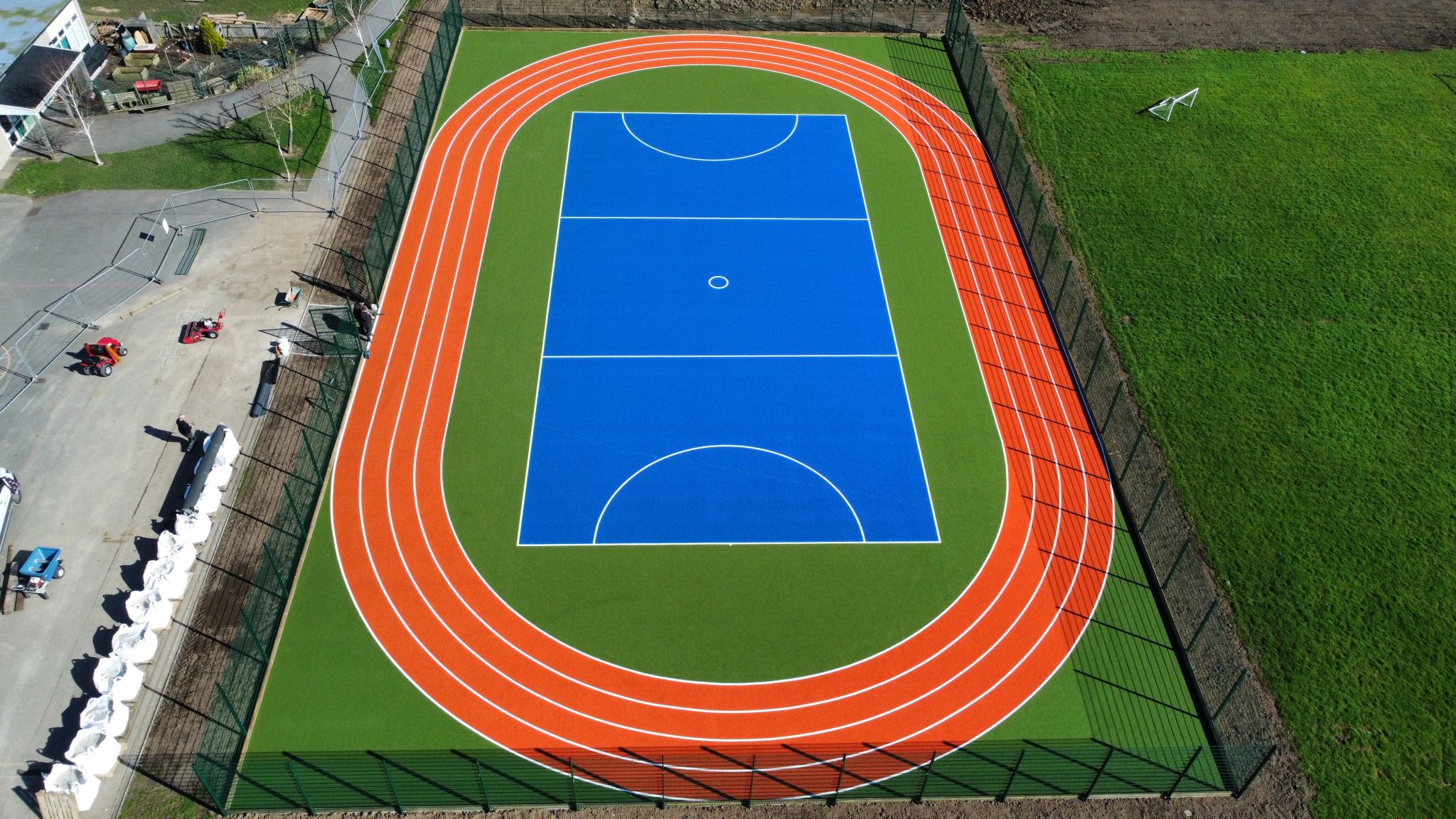
Not every defect requires resurfacing the entire MUGA. Localised damage can sometimes be repaired while the rest of the facility remains in good condition.
On synthetic turf, minor seam separation, damaged line markings, or an isolated tear may be repairable. Polymeric and macadam courts may receive local patch repairs when cracking or surface damage is limited to a small area.
Resurfacing becomes more appropriate when deterioration is widespread or the playing surface can no longer provide consistent performance. This may involve removing and replacing the synthetic carpet or installing a new surface layer over a suitable existing base.
Full reconstruction is different again. It may be required when problems originate below the playing surface, such as widespread base failure, structural movement or inadequate drainage. Replacing only the upper surface will not resolve defects within the underlying construction.
A MUGA rarely becomes unusable overnight. Its condition normally declines gradually, allowing facilities to plan resurfacing before the surface fails.
One of the clearest signs is widespread wear. Synthetic fibres may become flattened, split or excessively thin, particularly around goals, entrances and frequently used playing zones. On hard courts, the finish may become smooth, polished or visibly worn away.
Cracking is another warning sign. Small isolated cracks may be repairable, but recurring or widespread cracks can indicate movement within the surface or its supporting base.
Drainage problems should also be investigated. Water pooling after rainfall may be caused by contamination, compaction or blocked drainage. In some cases, specialist cleaning can restore permeability. In others, the issue may be linked to the base and require more substantial work.
Other indicators include fading or confusing line markings, loss of grip, uneven ball bounce, loose seams, standing water, moss growth and visible changes in surface levels.
User feedback can provide useful early evidence. Reports of slipping, inconsistent ball behaviour or uncomfortable underfoot conditions should not be dismissed simply because the surface still appears acceptable from a distance.
A MUGA may accommodate football, tennis, netball, basketball, hockey and general physical education. These activities place different demands on the surface.
Football and hockey create repeated directional movement and concentrated wear around goals. Tennis and netball depend on reliable grip, predictable ball response and clearly visible markings. Basketball requires a firm, consistent surface without cracks or changes in level.
Problems can arise when the original surface is no longer suitable for the facility's current use. A MUGA initially designed for casual school activities may later support competitive fixtures or extensive community bookings.
Resurfacing provides an opportunity to reconsider the facility’s sporting priorities. The replacement system should reflect its current and anticipated use rather than automatically reproducing the original specification.
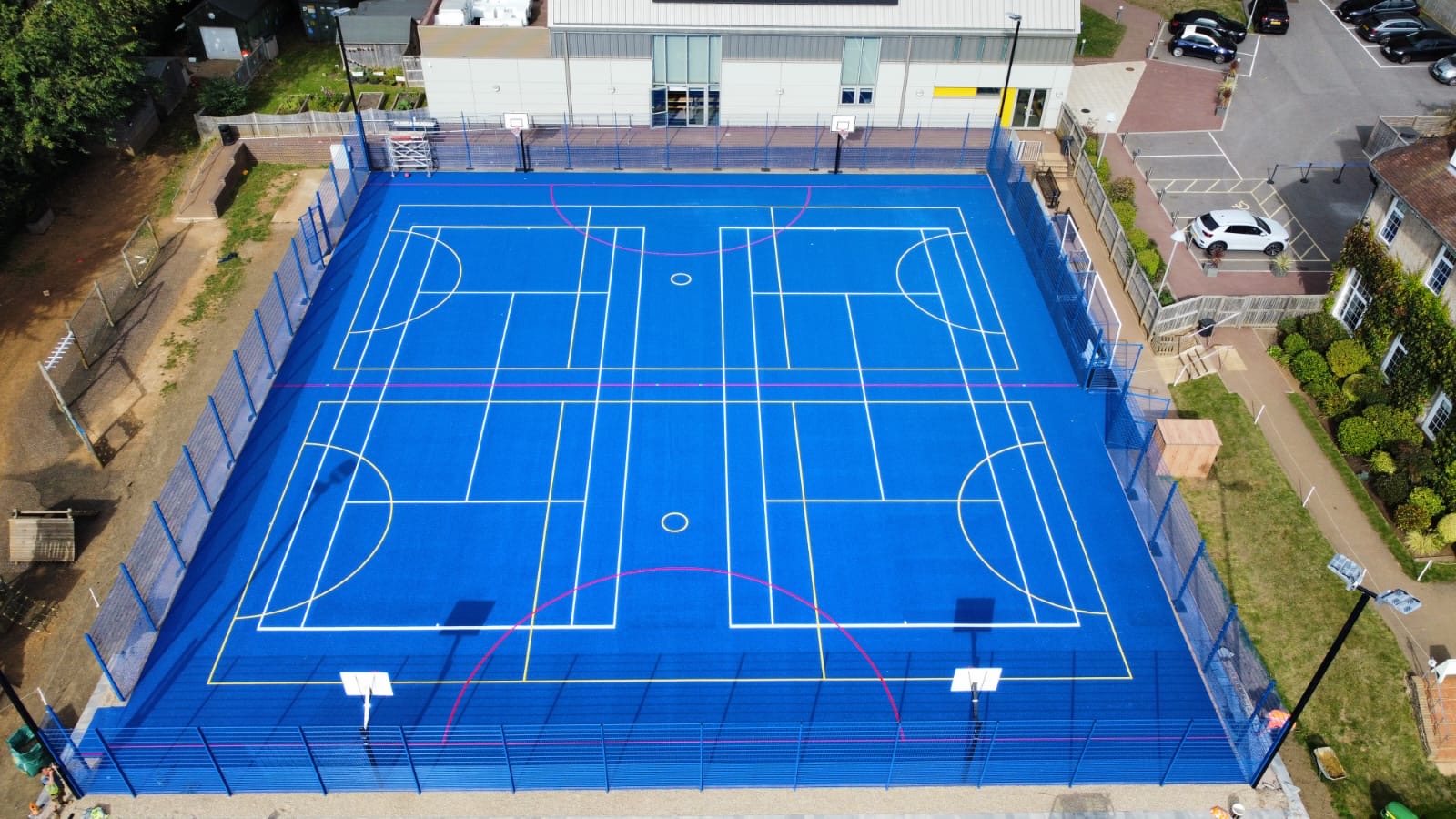
Regular maintenance can delay the need for resurfacing by reducing preventable deterioration. However, the required work will depend on the surface type.
Synthetic-turf MUGAs require debris removal, brushing, infill redistribution and measures to control weeds, moss and algae. Brushing helps prevent infill from compacting and supports consistent drainage and playing characteristics.
Polymeric and macadam surfaces should be kept clear of leaves, soil and other organic material. Moss and algae can make the surface slippery and may contribute to drainage problems. Cracks should be monitored and addressed before water enters and worsens the damage.
The Sports and Play Construction Association explains that appropriate maintenance is important for preserving playing performance, safety and product lifespan. It recommends combining routine in-house care with periodic specialist attention.
Maintenance cannot extend a surface’s life indefinitely. Once the material itself has worn out or widespread structural defects have developed, increasingly frequent repairs may no longer be economical.
A worn-looking MUGA does not always need to be replaced. Synthetic surfaces can become contaminated by broken-down organic material, dirt and fine particles. This can compact the infill, restrict drainage and leave the surface looking flat or discoloured.
A deeper cleaning or rejuvenation process may remove contamination, loosen compacted material and restore more even playing conditions. Hard surfaces may also respond to appropriate cleaning and moss treatment.
This is why the condition should be assessed before resurfacing is specified. If the carpet, polymeric layer or macadam remains structurally sound, maintenance may provide additional useful years.
Deep cleaning will not repair badly worn fibres, extensive cracks, failed seams or a defective base. It should be regarded as a condition-restoration measure rather than a substitute for necessary resurfacing.
Drainage has a major effect on both surface performance and lifespan. A MUGA that retains water may suffer restricted use, biological growth and accelerated deterioration.
On synthetic turf, fine contamination can form a restrictive layer within the infill. On porous macadam and polymeric surfaces, dirt and organic material can gradually block the open structure that allows water to pass through.
Water pooling does not always mean the surface has reached the end of its life. Cleaning and decompaction may restore drainage where the problem is limited to surface contamination. Persistent waterlogging after appropriate maintenance may indicate a deeper issue involving levels, outlets or base construction.
Installing a new surface without identifying the cause of poor drainage risks transferring the same problem to the replacement facility.
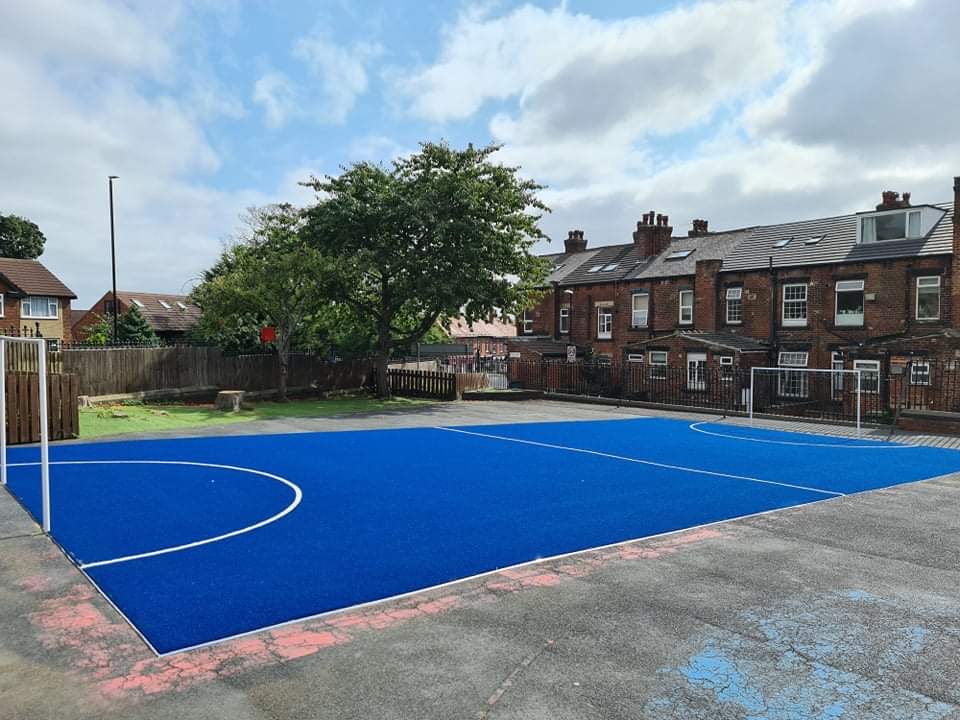
A detailed condition inspection should be completed before deciding whether to repair, rejuvenate, resurface or reconstruct a MUGA.
The inspection should consider the playing surface, line markings, seams, edges, fencing, gates, drainage and surrounding areas. It should also examine usage patterns and determine whether the current surface remains suitable for the sports being played.
Where the facility supports formal sport, performance testing may be needed to assess factors such as grip, ball response, shock absorption and surface regularity. Visual appearance alone cannot confirm whether a surface continues to meet its intended performance requirements.
Sport England provides design and technical guidance covering artificial grass, needle-punch and polymeric outdoor sports surfaces. Its guidance emphasises selecting and maintaining a surface according to the sports and performance levels it needs to accommodate.
The resurfacing process depends on the existing system and the condition of its base. Synthetic turf will normally be lifted, with the infill removed, before the underlying shockpad and base are inspected. Repairs can then be completed before the replacement carpet, infill and markings are installed.
A hard-court MUGA may require cleaning, crack repairs and levelling before a new polymeric, macadam or acrylic finish is applied. If the base has moved or failed, more extensive reconstruction may be necessary.
Resurfacing also creates an opportunity to revise colours, markings and sports provision. A facility can sometimes be adapted to support different activities, improve accessibility or reduce confusion caused by too many overlapping lines.
A MUGA should not be resurfaced simply because it reaches a particular age. Most facilities will require replacement somewhere between 8 and 15 years, but their actual condition should determine the timing.
Regular inspections and maintenance records make this decision easier. They show whether defects are isolated or recurring, how quickly maintenance needs are increasing and whether the surface continues to perform consistently.
Resurfacing is usually appropriate when wear has become widespread, repairs are increasingly frequent, or the surface no longer delivers safe and predictable playing conditions.
Assessing the surface, drainage and supporting base together helps ensure that the proposed work addresses the cause of the deterioration rather than only improving its appearance.