- About
- Services
- Play
- Sport
- Case Studies
- News
- Contact
- Pitchbuilder

Synthetic turf has been a fixture of UK sport and play for nearly two decades, and a lot of those early pitches are now reaching the end of their working life. A well-built, well-maintained 3G or sand-filled pitch can perform for 8–10 years as standard, and some go well beyond that - but every surface eventually needs a full resurface rather than another round of maintenance. The hard part is knowing which one you actually need, and when.
At Synthetic Turf Management (STM), we've resurfaced pitches at venues ranging from grassroots clubs and schools to Wembley and Twickenham, so we see this question a lot. Here's how to read the signs, what the resurfacing process involves, and what standards your new surface should meet.
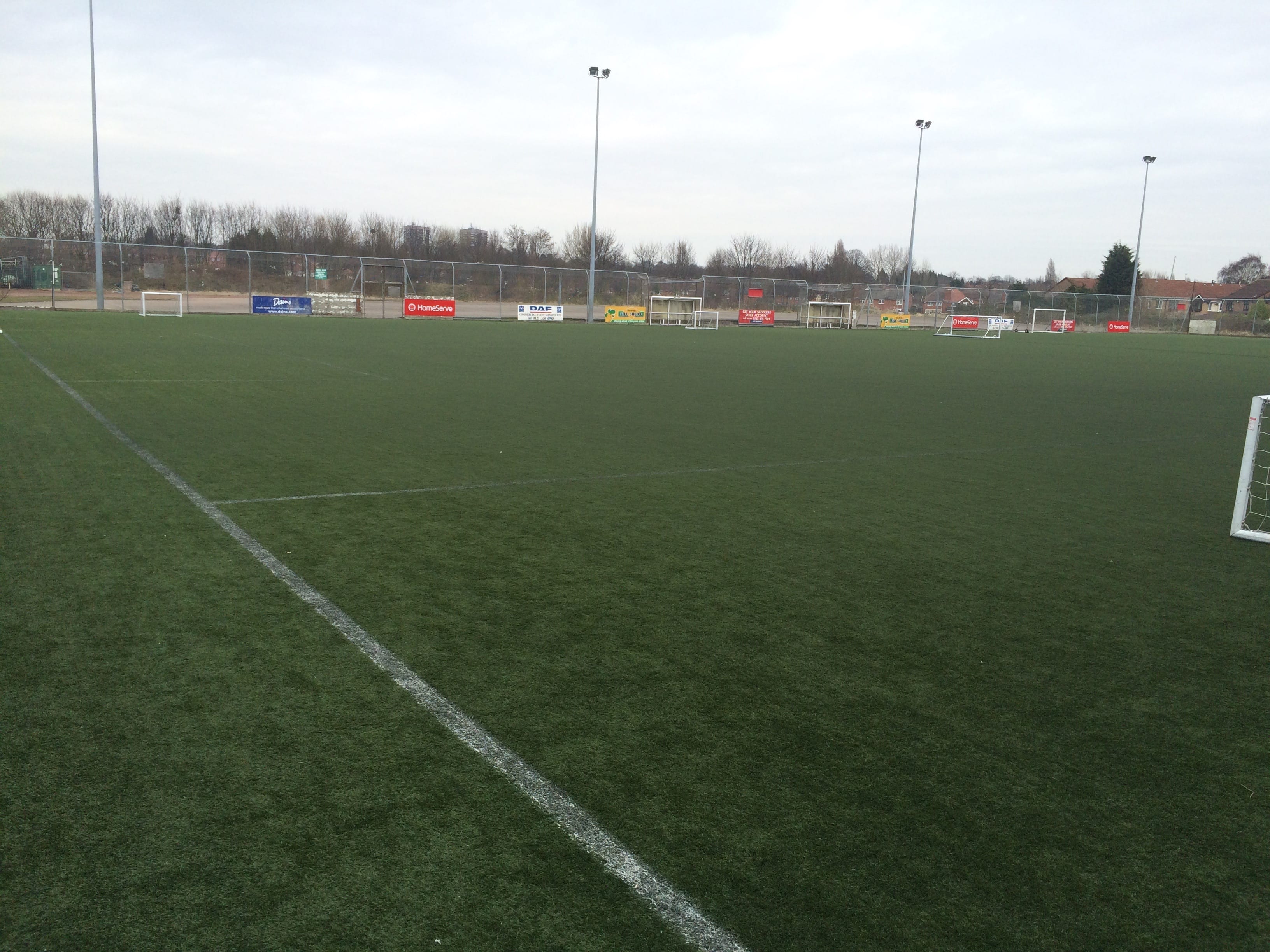
It is usually quite clear to see when a pitch needs resurface
There's no single answer - it depends on usage hours, the sport being played, the infill type, the quality of the original build, and how consistently the pitch has been maintained. As a rough guide:
If your pitch hasn't been retested against current governing body standards since installation, that's also worth checking. Testing requirements from bodies like the FA and FIFA evolve, and a pitch that passed when it was installed may no longer meet today's criteria.
A pitch rarely fails all at once - it's usually a combination of the following:
If you're only seeing one or two of these, on a small scale, routine maintenance may extend the pitch's life a few more years. Several at once - particularly drainage failure combined with infill loss - usually means a full resurface is the more cost-effective route.
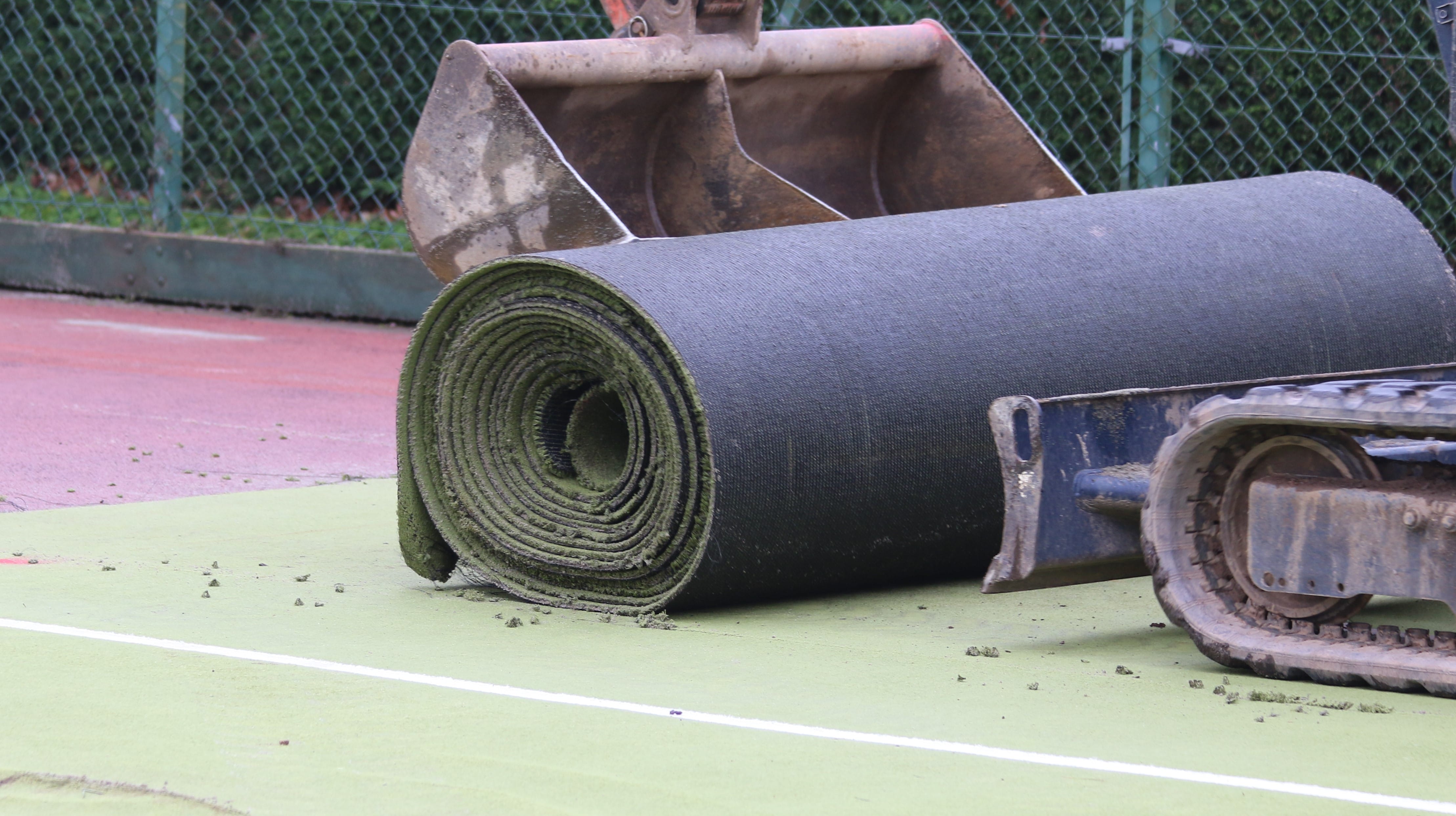
The previous surface is always disposed of safely
It's worth being honest about this distinction before committing to either route:
A free site consultation is the quickest way to get a straight answer rather than guessing.
1. Site survey and consultation We assess the existing 3G pitch, football, tennis or hockey surface, the sub-base condition, and your budget and timeline, and recommend the most cost-effective scope of works.
2. Uplift and removal The old carpet is cut into manageable strips and rolled up using specialist equipment - a worn pitch holds years of infill and contaminants and can be extremely heavy to move safely without the right machinery.
3. Infill extraction and disposal Sand and rubber crumb infill is removed and, where possible, cleaned and reused or recycled rather than sent to landfill - in line with SAPCA and Sport England guidance on reducing the environmental impact of synthetic infill.
4. Sub-base and shockpad inspection With the old carpet gone, we inspect the base layer and shockpad and carry out any patching or repairs needed before the new surface goes down.
5. New carpet installation We install new synthetic turf - including TigerTurf systems, our British manufacturing partner - specified to the right pile height, density and infill type for the sport and usage level.
6. Infill and line marking Fresh infill is applied and compacted, and pitch markings are added or repainted to current specifications.
7. Testing and certification The finished surface is tested against the relevant governing body standards - FA, FIFA Quality, World Rugby Regulation 22, England Hockey or LTA, depending on the sport - so the pitch is certified ready for competitive play.
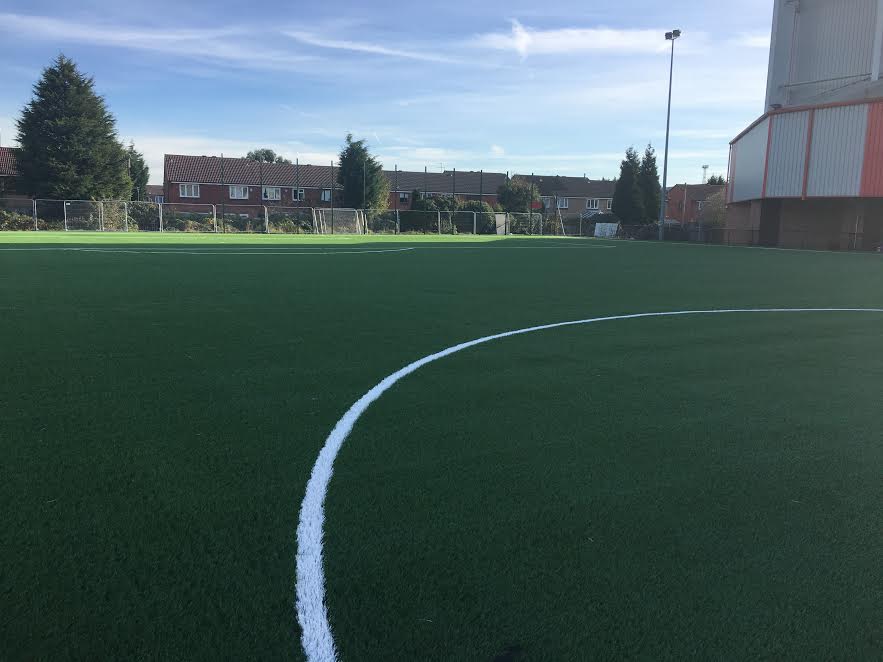
A resurfaced pitch isn't just about looks. Standards from bodies like the FA, FIFA, World Rugby, England Hockey and the LTA exist to ensure consistent ball roll, bounce, slip resistance and shock absorption - all of which affect player safety as much as performance. Working with a SAPCA-recognised contractor (the Sports and Play Construction Association, the UK's trade body for this industry) is a reliable way to make sure those standards are built into the project from the start, not retrofitted afterwards.
How long does a 3G pitch last before it needs resurfacing? Typically 8–10 years under regular use, though well-maintained, lower-usage pitches can last 12–15 years or more.
Can I resurface only part of a pitch? In some cases, yes - if the sub-base and shockpad are sound and only the carpet has worn, a like-for-like carpet replacement can be more cost-effective than a full rebuild. A site survey will confirm whether this is an option for your pitch.
What happens to the old infill and carpet? Wherever possible, infill is cleaned and reused or recycled, and old carpet is cut down for disposal or repurposed for smaller, lower-spec areas such as walkways.
Does a resurfaced pitch need to be re-certified? Yes - resurfacing is the natural point to retest the pitch against current FA, FIFA, World Rugby, England Hockey or LTA standards, since testing requirements are periodically updated.
Every pitch ages differently, and the right answer - maintain, partially resurface, or fully rebuild - depends on your specific surface and budget. STM offers a free, no-obligation consultation to assess your pitch and recommend the most cost-effective path forward.
01642 713 555 | info@stmworld.co.uk | Get a quote
Want to visualise your new pitch first? Try our Pitchbuilder tool.
For more information on how we can help, please use this contact form to send us a message.
Or contact us directly at:
Due to our rural location and occasional power outages please contact 07760 759 716 if the landline number is not available.
| Monday | 8:30 - 17:00 |
| Tuesday | 8:30 - 17:00 |
| Wednesday | 8:30 - 17:00 |
| Thursday | 8:30 - 17:00 |
| Friday | 8:30 - 17:00 |
| Saturday | Closed |
| Sunday | Closed |
*Please note we are closed for all public bank holidays.